|
|
- Happy New Year
- Goodbye James
- Goodbye Part 2
- Our New
Teacher
- Andy Sirkis
Part 2
- Neil & Stephanie
- Neil Fanning
Part 1
- Neil Fanning
Part 2
- Stephanie Sanders
Part 1
- Stephanie Sanders
Part 2
- Seeing
Clearly
- Joshua Edel
- Music
- Homestay
- My World
Leader
- Homework
Yuck!
- Grammar
Yuck!
- Sports Day
- The Eclipse
- A New Staff
Person
- 2012
Talk-Time
- Summer Fun
for Kids
- Taking a Break
- Andy
&
Our New
Teacher
- Life beyond
Earth?
- A
Magical
Moment
- Great Party
- First Impressions
Of Tohoku
- Halloween
- Halloween Smiles
- Costume
Winners
- This week's Classes
- Thanksgiving
Message
- JHS National
Speech Contest
- Riku
Part 2
- A Christmas Story
- Fun Christmas Parties
|

|
James and I would like to wish you all a Happy New Year in 2012! My family has started the year with a short trip to California to see grandma and my sisters. You can see the family above with a few of the kids in my sister’s family. Grandma is on the far right. It is always great to see family. I will be back at school soon after the New Year. James will tell you about his coming plans in next week’s blog. We look forward to hearing more of you commenting on the blog. Let us know what you would like to read this year. We are always interested in your ideas. May hope, peace and love surround you in 2012.
|
|

|
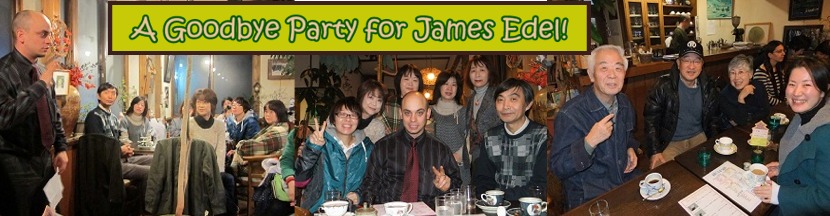
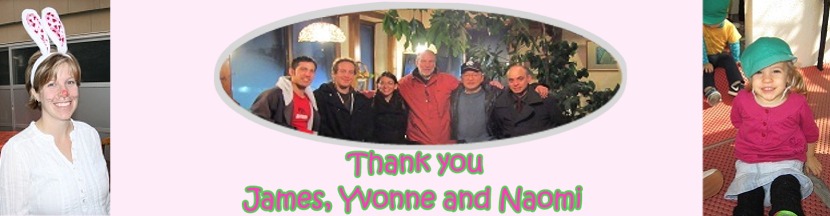
I missed blogging last week. Things were just too busy. James our wonderful teacher left for Canada last night to be with his wife, Yvonne and their two children. So, this is a sad week. Their baby boy has a heart condition, so they need to be in Canada to get the best medical care possible. The Edel family in their short time here was liked by everyone. I will not share anything real personal about them here because I conveyed my feelings of them at James’ goodbye party. Instead we will hear from James this week and next week. Thanks James and Yvonne for everything! Our prayers and love are with you!
Well, what have I done in Kisakata? I enjoyed teaching English, but mostly I enjoyed listening to you all help me learn about Japan and about Japanese life. I remember the question people used to ask me when I first came to Japan “Nihon no seikatsu ha dou deshitaka?” I had to look up “seikatsu”* in my dictionary. In English it can be translated as “life,” “living,” or “lifestyle”. Let me share with you 5 things I really like about life in Japan.
1. Onsens (with Naomi and me)
2. Gusto (the button you press to call the waitress)
3. Osaka’s Umeda Station (so many people)
4. Nigori Sake (the taste)
5. Kappa Sushi (the conveyor belt)
Naomi’s list
- Anpanman (ahhhhhhhhhhhh---punch!)
- Nai Nai Nai, Bahh! (terebi bangumi**)
- Shirayuri Kindergarten dances (oyugikai***)
- My Japanese baba’s and gigi’s
- Sloan!
Yvonne’s list
- Hard Off and Second Street (recycle shops****)
- Ferrite Museum Child’s Play Area (kodomo koristukan*****)
- Osaka, Tokyo, Nagano, Yuzawa, Tazawako, and all the places I visited. (ryouko suru)
- Massage chairs at the onsen (relaxing!)
- Living beside the ocean
We were very lucky and blessed to experience Japanese life here in Akita. We don’t know when we will be able to return to Japan again but we feel very very fortunate that we could meet all of you. Thank you for teaching us about Japanese life, we like it!
*生活
**テレビばんぐみ
***おゆうぎかい
****リサイクルショップ
*****フェライトこども科学館
|
| |
|

|
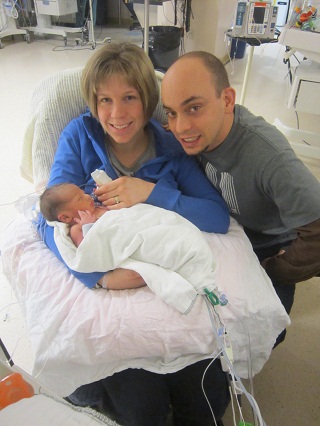
This week is part two of James saying goodbye to everyone in Nikaho City, thanks James! I just receive a photo from James of the new member of his family, Joshua Edel. He also said that Yvonne is fine. Congratulations to the Edel family!
The second most popular question I was asked during my time in Japan was “Why did you come to Japan?” This is a very good question and difficult for me to answer. My most common answers were: I wanted to learn a language (Japanese), I wanted my family to go on an adventure, also Japanese lifestyle is often similar to Canada and it is very safe here. Lastly, I wanted Japanese to learn about me and the thing I value most.
I came to Japan to learn about Japanese life. My previous blog entry was about “seikatsu” or what I thought of Japanese life. If you add a “ku” onto this word it becomes a very different word* [scroll down to see this word]. In only 16 months in Japan I went through one of the biggest struggles Japan has had in over 50 years. I learned the new phrase to me, “Ganbatte!”** [What’s your idea on how to translate that into English, scroll down to the bottom for some answers]. I’ve met people who can’t go back to their homes.
In a way, I have had two major earthquakes in Japan. The latest one was in my family. Again, the Japanese who came to comfort me, SES friends, church friends, and baseball team friends, made me feel loved and supported. Thank you! I would also like to thank Sloan and Hitomi for their kindness and support. Thank you! Kami-sama and the people that have surrounded me have made life’s struggles easier to bear. Domo, arigatou, gozaimasu! Actually, I don’t really know why I came to Japan, but I know what I’ve learned from Japan. I won’t forget any of these precious memories.
*生活苦 - seikatsuku
**頑張って can be translated in many ways:
- You can do it!
- Keep fighting!
- Yes we can!
- Do your best!
- Hold on!
- Go for it!
- Keep at it!
|
| |
 |

|
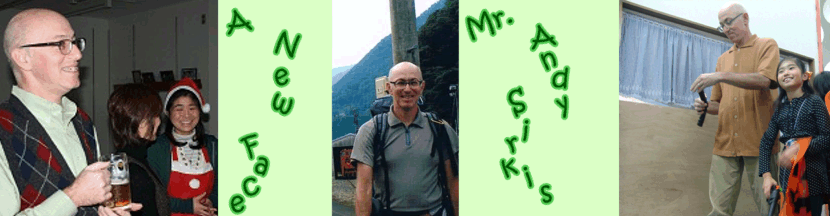
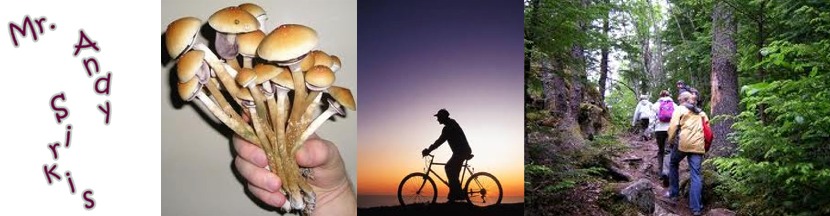
My right-hand man James is back in Canada. So, I asked Mr. Andy Sirkis to help me with some of the classes at school. I am delighted that he said, "Yes". Andy is a wonderful man who has been living in Nikaho City for around two years. He has been helping our school with special events. Andy has started to teach the adult classes. If any of you are interested in a class, please contact the school and we will get you talking and learning with him. Andy has written a personal profile for you to learn about him. We hope you get to know him better over the next few months.
Teacher’s Name: Andy Sirkis
Home Country, City: San Francisco, USA
Education: MBA, Finance
Time in Japan: July 2009 to present
Hobbies: Bicycling, hiking, investing, current events
|
Have you heard of Ohio? It's a state in the middle part of America and it's where I grew up. My older sister, my parents and I enjoyed living there, but all of us moved to Philadelphia which is a large city on America's east coast. After my sister grew up, she moved to California. I liked visiting there so much that I decided to move there too. Living in San Francisco where there are so many cultures and many Japanese people encouraged me to expand my interests beyond America.
My lovely wife Yuriko and I met each other in San Francisco and have been married for more than 10 years. Yuriko was born and raised in Kisakata and for that reason we decided to move here. We have one daughter who is now in Kisakata Elementary School. She is fluent in both Japanese and English.
Thanks to my wife and her excellent cooking skills, I have come to love and appreciate Japanese cuisine. Every day is a learning experience for me and sometimes I am frustrated by my difficulty with the Japanese language. Nonetheless, the kindness and patience of the Japanese people I have met has made a big impression on me. I have much to learn about Japanese culture and the Japanese language. I am certain that I am fortunate to experience living in Japan. I love it here!
My favorite hobby is riding my bicycle and if you live in Kisakata, you are living in a fantastic place to ride a bike. Riding up Mt. Chokai is my favorite thing to do and I feel blessed that I am living in a place where I can enjoy nature's beauty without having to travel a great distance. You may see me riding about town and if you do, please wave or shout hello. I promise to wave back! |
| |
|
 |

|
One of the reasons I like Japan is because Japanese people seem to appreciate nature and participate in so many outdoor activities. When I go hiking, or go for a walk around town, or go for a bike ride, I often see a lot of other people doing outdoor activities. It's a very healthy lifestyle and I believe people are happier if they spend time outside and if they do some exercise, even if it's light exercise. Isn't it great that older people in Japan like to participate in hiking and other sports? It's not just for teenagers and college students.
Oftentimes, when I am riding my bicycle near Nikaho Kogen or Mt. Chokai, I see people looking around for seasonal plants, vegetables, or mushrooms. They spend all day walking around in the forest, enjoying nature and getting good exercise while they do something useful. Then, everyone has the opportunity to enjoy eating the delicious healthy plants that are found. Does anyone in Japan ever accidentally pick or eat a poison mushroom? That happens in America sometimes.
Have you ever hiked up Mt. Chokai or any of Japan's other high mountains? In Japan, mountain hiking is made far easier and pleasant because of the mountain lodges and the abundance of trails that lead to the lodges. When you reach your destination after a long hike up the mountain, there is food to eat, a good place to sleep, a toilet to use, and most importantly, beer to drink. Sometimes they even have an outdoor hot bath! We don't have a mountain lodge system in America, so very few people want to bother with the inconvenience of hiking in the high mountains and there aren't so many trails.
|
 |

|
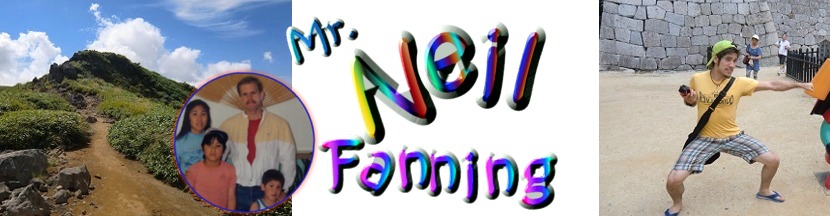
For the next month we are fortunate to hear from two young individuals, Mr. Neil Fanning and Ms. Stephanie Sanders who are currently living in Nikaho City. They will be sharing their experience of living in the Japan countryside and specifically, Nikaho City. Neil has been living here for almost three years and Stephanie is in her second year. Each of them will be writing two blog entries. We hope you will join us and read about their interesting lives. Feel free to leave a comment for them by using the recorder.
|
 |
|
|
Hello, I am Neil Fanning. I have lived in the suburbs of Seattle for most of my life. I thought that it was a perfect location to be since it was close to the city and was very convenient, but at the same time, far enough to where I didn’t have to deal with the craziness city life can bring. Before I came to Japan, I felt like I wanted a change of pace and requested a rural placement in the JET program.
I can honestly say that I have no regrets about coming to Nikaho City. Living in the shadow of Mt. Chokai and being surrounded by nature brings harmony to my soul. I am always filled with wonder at just how beautiful our world is and I now realize just how much we should cherish it. If I hadn’t come to Nikaho City, I don’t think I would have come to feel this so strongly.
There are some downsides to living in a rural area, however. Things can be more expensive and harder to obtain than in a big city. I must rely on my car more than public transportation.
But the lifestyle here is much healthier than the city. People grow and forage their own food, form a stronger community, and learn to work together with nature and the elements. I believe this makes for a people who are strong, adaptive and more imaginative. I certainly feel that I have become a stronger person living out here in the “inaka”.
|
 |
|
|
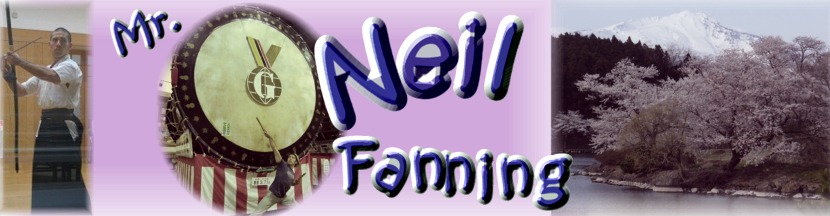
I believe that for many Americans, at least where I am from, Japanese culture is a subject of great interest. The traditional clothing, samurai spirit, cuisine, and how tied to tradition and ceremony Japan appears to be is all very mysterious and exciting for us. I think it is safe to say that many Americans even long for a little bit of “wa (和)” in their lives. I know I did.
Coming to Nikaho City has been an amazing experience for me. I have been able to experience so much of Japanese culture in everyday life and on special occasions. I have seen the ceremonial dances in Kamigo at the temple by Shiro no taki, seen the artwork of the many talented people in Nikaho City, tasted traditional cooking of the area (including hata hata), and experienced Japanese budo through karate and kyudo. Currently, I am involved in taiko and I love it.
Although the taiko drum has been a part of Japanese culture, group taiko wasn’t conceptualized until the 1950’s. Japan may change through the years and so may its culture, but the people adapt the old to the new so as to preserve their culture and progress it at the same time. I love the fact that being in Nikaho City has allowed me to experience all these wonderful things so intimately. I doubt I would get this experience if I was in a big city like Tokyo. |
|

|
I am Stephanie Sanders. I have been living in Nikaho City for almost two years. The natural world here has been very interesting and different compared to my hometown. When I was younger, I liked to watch Godzilla and Gamera movies with my brother. Until I came to Japan, I thought those kinds of monsters existed only in movies.
One of the first things I noticed about my apartment in Nikaho were the spiders. Giant, mutant spiders hanging outside my window, watching me make my breakfast in the morning. On the bright side, spiders like to eat bugs for breakfast, and this keeps those bugs out of my home.
I once found a beetle bigger than my thumb in my parking lot. It looked like a giant, brightly colored kamemushi. I was shocked and fascinated, and tried not to run over it with my car. What a mess that would have made.
The mosquitos are not so big, but they are numerous. If I go out to the countryside without using bug repellent, before I know it I’m engulfed in a cloud of gnats and mosquitos.
Sometimes I visit the waterfalls near Mt.Chokai to cool off in the hot summer months. I’ve seen dragonflies there with bodies as long and as big around as my middle finger, and was even splashed by one that skimmed over some water. I’m glad the dragonflies are so big, because it means they can eat more mosquitos.
The nature in Nikaho is quite formidable, and often surprising, but it is one of my favorite things about living here. In Oklahoma there are lots of strange bugs too, but we don’t have mountains, ocean, or waterfalls. I feel blessed when I look out the window at Mt.Chokai, watch a sunset on the beach, or take a walk at Nakajima-dai (but I always remember my bug repellent).
|
|
|
|
When I’m living in a foreign country, there is only one time of year that I feel homesick. In America, students don’t have to go to school during the last two weeks of December. Many adults have a vacation during the last week of the month, too, because of the Christmas holiday. Christmas in America is a very important holiday for families. Every year, my whole family would gather at my grandparents’ house, eat lots of delicious food, and have a good time together.
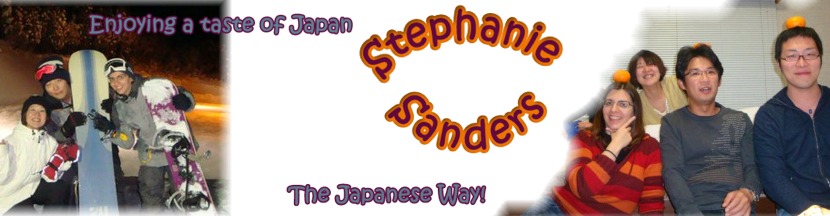
In countries like Korea and Japan, Christmas is not so important. It seems like any other day, but I know my family is on the other side of the world celebrating the holiday without me, so I feel quite homesick. Last year, when December came, I started to feel sad because I thought I would spend the holidays alone. Lucky for me though, I wasn’t. Christmas may not be so important in Japan, but New Year’s is. As Oshogatsu approached, I was invited to spend the holiday with some friends I had made in Nikaho. On New Year’s Eve, we did snow sports, went to an onsen, and ate lots of soba and other Oshogatsu food. The next day, we went to a shrine in Nikaho for hatsumode. When I went home, I found lots of Oshogatsu cards in my mailbox from all the friends I have made in Nikaho. I was very grateful to experience New Year’s the Japanese way, because even though I miss my family, it reminded me that I have a family in Nikaho too.
|
|
|
|
People say, “Wisdom comes with age”, but sometimes it is not true. I came to Nikaho, Japan just before turning thirty-six years old. I got on the plane with my newly bought Toshiba computer. It was a very appropriate purchase considering my destination was Japan. I knew absolutely nothing about the computer world. I even opposed it, however I had a new job and it seemed a necessity. My wife still prefers staying away from them. Computers are like spiders; you scream and run away when you see them.
The computer proved to be useful. In three short years I learned a little of the computer world, although it was with limited success. In return I was left with poorer eyesight. Yes, my perfect vision slowly became worse. At first the problem was being farsighted, but the last two years, I have had to struggle with being nearsighted. Yes, just this week I finally admitted to the problem and bought some glasses to wear throughout the day. I can see clearly again!
It is strange that I waited so long to finally buy classes that I knew were needed. If I were wise, I would have bought eye glasses a couple of years ago. I might not be wise, however I am grateful to see clearly again. Sometimes we endure things that we don’t need to endure. What things have you endured when all along you didn’t have to? Is it time to reconsider things? Life is constantly changing. We have to adapt.
|
|
|
|
I know many of you have been very interested in how James and Yvonne’s baby, Joshua is doing recently. So I asked James to give us a report concerning his health. You can read it below. Isn’t Joshua a cute little baby?
Little Joshua is doing well. He lives at home with us now, not in the hospital. He had his feeding tube in his nose removed about 7 days ago. Now he can drink from a bottle. Joshua does what normal babies do. He burps, he passes gas (farts), and he spits up on my shirt. When Joshua poos we cheer for him and say, "Good job Joshua, you pooed."
We do the same with our daughter, Naomi. She is toilet training. We cheer for her "Good job, Naomi, you pooed in the toilet!" When I go to the toilet, nobody cheers for me. I'm too old [you can laugh here].
Joshua gets a lot of medication. Yvonne gives him:
- blood pressure medication (so his heart doesn't have to work as much to pump blood)
- blood thinner / aspirin (so his blood moves more easily)
- anti-reflux medication (so he doesn't vomit or spit up the two previous medications)
- diuretic (to help him pee)
I've learned that looking after a baby is a lot of work. I get so tired giving Josh a bottle of milk at 3:00am. Sometimes I hear about a mother all alone in a big city like Tokyo. Her husband works late and her family is not living close to her. This must be very lonely and difficult. I am lucky that I have my in-laws to live with (Yvonne's parents). They help look after Josh. I am also lucky to spend lots of time at home helping with him. Looking after babies is not easy. I don't know how our mothers could look after so many babies. Our mothers are heroes. So, in conclusion, babies are very cute but that's not the only thing they are.
|
|

|
The other day I was making a music CD for my son and wife. They gave me a list of favorite songs, and I proceeded to download several songs from iTunes. I ran across a favorite artist of mine when I was a young teenager. I thought it would be fun to share one of his songs with you. The song is “Morning Has Broken”, by Cat Stevens. His current name is Yusuf Islam. He changed his name in the 90’s. The lyrics were written by Eleanor Farjeon in 1931. Click the PDF button to see the lyrics and click the TV above to listen to the song. Do you have a favorite song? We would love to hear about it. Please share it with us. We hope to hear from some of you this week. Until then, goodbye.
|
|

|
For more information on the Homestay, click " here". |
Hi, my name is Gini Schmidt and my sister’s name is Wendy Holman. We live in a house in Seattle Washington. My family just loves meeting people from faraway places. We would be so happy for you to consider visiting us for a homestay!
Growing up in Seattle, I remember visitors from Europe, South Africa, Australia, Israel, Egypt and Latin America coming for dinner or the weekend. We always had a world globe or map available to see where our visitors came from. As a young adult, I did a lot of traveling in my 20’s! Always, always, always, the best parts of those trips were the times spent with local people in the countries I visited!
Professionally, my entire working years have been teaching English, most of the time at Seattle Central Community College. My students come from everywhere imaginable. Some are immigrants and others are international students planning to stay and get their college/university training here.
Now, as I approach retirement and have more free time, I’m excited to host more visitors. In the recent past, our guests have enjoyed horseback riding, hiking, blue grass music, road trips to Mt. Rainier, ferry boat rides to the San Juan Islands, shopping at outlet malls, late night chats, galleries and, if you’re a baseball fan, there’s always a Mariners game. I also offer custom plans for tutoring and English instruction if that is your interest. Guests often come with a special goal or activity in mind. It’s my pleasure to help guests make the most of their time and do those things they have dreamed of.
While the entire year is wonderful in the Northwest, I am especially excited for spring and summer. The natural beauty is breathtaking this time of year. If you are interested in outdoor adventures, there is a lot to experience right now.
Please come play with us!! I also enjoy correspondence, so please feel free to email me with questions or thoughts. Then, if you decide to come stay with us, we’ll already have a head start. Hope to hear from you soon!
|
|

|
Have you ever been a leader? Do you wish to be a leader? Many people desire to be leaders; however there seems to be very few great leaders. Many countries will be voting for their leaders this year. In France the first big election is this month. The USA will have there presidential election this November. Many Middle Eastern countries are now trying to decide who will be the leaders in their countries. How do you become a leader?
Well, let to tell you how it was decided in a third grade class here in Japan. One day an eight year old boy came home, and at the dinner table he quietly said, “I was chosen as the class leader”. As he said it, he dropped his head as to say, “Oh no”. His parents were amazed and said, “That’s fantastic! What an honor to be voted as a class leader. You should be proud”. The parents went on and asked, “What kind of process did your class use to choose you?” The young boy said, “The teacher ask everyone who wanted to be a class leader to come up to the front of the classroom”. Then the teacher said something like, “Okay, do paper, rock, scissors (junken). The winning boy and girl will be our class leaders”. The parents looked at each other and just laughed. They congratulated their child, encouraged him to do a good job and smiled.
Wouldn’t it be nice to decide our leaders by a simple process of paper, rock, and scissors? Life can be so simple when you are young and so complicated when you grow older. This week tell us about your leadership stories. We would love to hear from some of you. |
|
|
|
We have added a few more web pages to our web site. Last month a “homework” page was added to the lesson tab on the menu bar for our children. The children will be practicing their reading, and question & answering ability on the page. They can also record their reading and answers on the page. It is a great tool for kids who need a little extra help outside of class. You need the ID and password to access the page. You can click the buttons above to see a demonstration of what is on the homework page. Let us know what you think about it. If you have any ideas for the web page, let us know.
Next week I will talk about another new web page. Hope you come back next week, too.
.
|
|
|
|
This week we are happy to add another service for our students. On the “Extra” tab on the menu bar there is another new web page. It is the very thing most students will run away from. Yes, it’s grammar. James Edel (our former super teacher) worked very hard on providing a systematic approach to learning simple grammar for our adult students.
Many adults don’t want to learn grammar in a conversation class. However, in order to communicate well you need to use grammar correctly. Instead of teaching a lot of grammar in class, we have provided a self-study grammar course with the emphasis on listening and speaking. There is also writing and reading aspects to the course, if the student desires to utilize it.
As the student works through the grammar course, they will become better communicators because they will be able to use grammar correctly in their conversations. Each student records their voice while working through the exercises. One additional benefit of the course will be an increase in your English vocabulary.
Why don’t you give it a try? Initially, we are looking for several students to try it for free. Do you live in Nikaho? Are you interested in testing the course with us? If so, give us a call at 32-5188. Look forward to hearing from some of you.
|
|
|
|
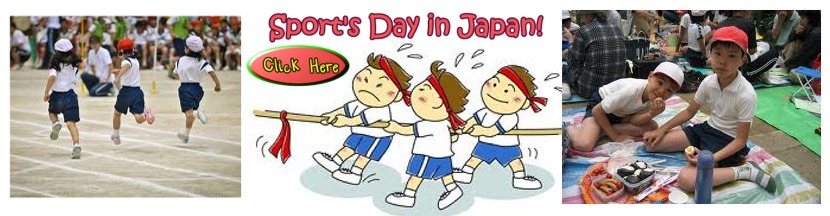
Last week was Kisakata Elementary School’s yearly “Sports Day” event. It was scheduled for Saturday, but was cancelled because of rain. It was rescheduled on Sunday. I have been to many sports days over the years; however I must say it was the coldest one of them all. Everyone was cold.
The teachers, volunteers and children did a great job to get the field ready for the event. They raked the ground, filled in water puddles with soil, chalked the track and set up all the tables, chairs and loud speakers as well as prepared all the equipment for the activities.
The event started with the formal opening ceremony which most Americans can not imagine. To us, the ceremony is like the Olympics. Once the formalities were over, there were lots of enjoyable races, activities and even a dance. Of course there were the traditional tug-of-war, hundred yard dash and as usual a few hilarious relay races. The morning ended with lots of laughter, and smiles.
The first and second graders finished at noon. The older children had lunch with their families. With full stomachs, the kids returned to the field for more competition and fun. The weather finally warmed up around 1:00pm. There were more relay races, and activities to finish out the day. For the foreign readers, click “here” to get an idea of sports day in Japan. For privacy reasons, I decided not to show ours. Instead the sports day video was taken by some parent from another school. For more information on sports day go to Wikipedia.
|
|
|
|
Did you see the eclipse? Many of the school children here were very excited about seeing it. Some of the schools in Nikaho prepared special glasses for everyone to get a look at the eclipse. I didn’t purchase any special glasses; however, I was fortunate that my neighbor smokes. Yes, he was outside with a cigarette and his favorite black ashtray. He wasn’t using the ashtray to put his cigarette ashes into it. Instead he was using it as an eye glass to watch the eclipse. He had a small audience watching with curiosity. He called everyone over to take a look at this once in a life time experience. Thanks to him we saw a glimpse of the spectacle! Now, isn’t that Japanese ingenuity?
|
|
|
|
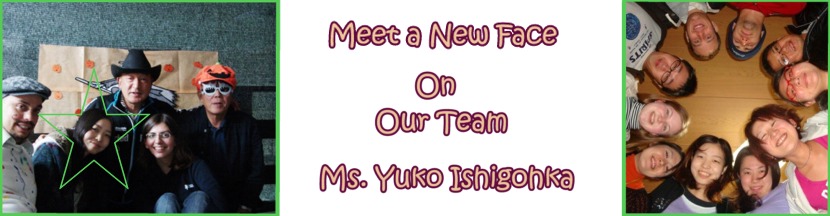
I am excited to convey that we have a new member to our team here at SES. I have known this young lady for many years. She will be a delight to work with in the next few months. I will let her introduce herself to you. You can leave her a message of good luck on the recorder.
Hello everyone,
I’m Yuko Ishigohka. I guess most of you already know me because I was Sloan’s student from the 5th grade in elementary school until I graduated from high school. I also occasionally joined SES events from time to time. I look forward to meeting many of you for the first time.
I’ve started to work at SES from this month. Surprisingly, Sloan offered me a job to work with him at the school. Helping him was always what I wanted to do, and working here was a secret dream of mine. It’s only a temporary job, but I’m very happy to be able to work here.
Do you like studying English? How do you enjoy using English? I love to watch movies and communicate with my overseas’ friends through the internet. When I was a student here, I used to come to school and watch DVDs, use the internet to exchange emails with students in Anacortes, and chat with them. I hope more students will do the same. There are many ways you can improve your English ability. Let’s enjoy using English together.
To be honest with you, I’m very worried about working here because I have never experienced this kind of job before. But hopefully I can support the school in many ways with the volunteers. I’m not sure what will happen in the future, but I’ll do my best for the school!
皆さんこんにちは。
石郷岡祐子と申します。私は高校を卒業するまで8年間、このスローンズスクールで英語を学びましたので、ほとんどの方は私をご存知かもしれません。スクールのイベントへも時々参加していました。
今月から、私はこちらで働かせていただくことになりました。仕事のオファーをいただいたときは驚きましたが、こちらで働きながらスローン先生を手伝うことは私の密かな夢でもありました。短期間の仕事ではありますが、こうして働けることになり、本当に嬉しいです。
ところで、皆さんは英語の勉強が好きですか?英語を話すことが楽しいですか?
私は映画を観たり、インターネットで海外の友達とコミュニケーションを取るのが大好きです。
このスクールの生徒だったころは、よくここへ来てDVDを観たり、姉妹都市であるアナコーテス市の生徒とメール交換やチャットをしていました。そのように皆さんにとっても気軽に利用でき、英語力を向上させるきっかけの場になればと思います。一緒に英語を楽しみましょう。
このような仕事は未経験ですので正直不安でいっぱいですが、これからもボランティアスタッフの皆さんと共にさまざまな方向からスローンズスクールを支えていきたいと思います。先に何が起こるかはわかりませんが、スクールのためにベストを尽くしますので、よろしくお願いします!
|
|
|
|
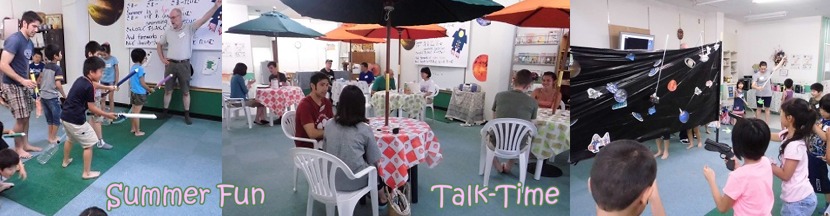
This year “Talk-Time” will be Friday and Saturday for 3 weeks, starting July 13th. Our Friday “Talk-Time” will be from 7-9 pm. We will make it a party atmosphere. There will be both beer and non-alcoholic drinks.
On Saturday there will be two “Talk-Time” sessions. The first one from 10:00 - 11:30 am. The second session will be a yakisoba party from 5:00 - 7:00 pm. We will also have beer and non-alcoholic drinks. We will prepare the yakisoba. The cost is 200 yen. If you prefer not to eat yakisoba, you can bring your own food or enjoy a simple drink. It will be an enjoyable time to talk, eat, and drink. You will find the information on our “event-calendar” at http://ses-kisakata.com/web_calendar_event01.html, too.
今年の「トーク・タイム」は7月13日から3週間に渡って金曜日と土曜日に行います!金曜日の「トーク・タイム」は午後7時~9時で、パーティスタイルにする予定です。ビールとノンアルコールドリンクをご用意しております。
土曜日は2回に分けて「トーク・タイム」のセッションを行います。1回目は午前10時~11時30分の通常セッション、2回目のセッションは午後5時~7時に焼きそばパーティを開催します!こちらでもビールとノンアルコールドリンクをご用意しております。焼きそばは私共で準備致します。(参加費:200円)焼きそばが苦手な方はご自分で食べたいものを持参いただくか、ドリンクでパーティをお楽しみ下さい。とても楽しく有意義な時間となることでしょう!このイベントに関する情報は「イベントカレンダー」(http://ses-kisakata.com/web_calendar_event01.html)でもご覧いただけます。
|
|
|
|
For any of you who have elementary school age children, we have our second annual “Summer Fun” event. This year we will have two sessions, one is in July and the other in August. Please click the above PDF buttons to either read or print them. Last year’s camps were a real hit with the kids. We are looking forward to having a blast again this year. The camp theme will be “space”. One of the activities will be making rockets. The children will be racing their rockets to see whose rocket reaches their planet first.
小学生のお子様がいらっしゃる方はいますか?当校では去年に引き続き2度目の「サマー・ファン」というイベントを行います。今年は7月と8月の2回セッションがあります。上記のPDFボタンをクリックしてチラシをチェックまたは印刷してください。去年のキャンプは子供たちに大好評でした!今年もとても楽しい時間を過ごせることを期待しています。今年のテーマは「宇宙」です。いろいろな活動をしますが、その中の一つがロケットを作ることです。子供たちに自分たちが作ったロケットでレースをしてもらいます。誰のロケットが一番最初に惑星に着くか楽しみですね!
|
|
|
|
We had a wonderful "Summer Fun Camp" last week. Our theme was "Outer Space". The children enjoyed making rockets, alien space ships and homemade ice cream among the many activities that were planned. We had our hands full with 25 excited children. Boy, do they have a lot of energy. The staff was fantastic! Stephanie, Liam, Neil, Yuko and Akemi, thanks for a great job! You all made a lot of kids happy.
We finished our last day of "Talk-Time" today. It was fun meeting and talking with different people throughout the three week event. Thank you everyone for joining us and making it enjoyable.
It has been a busy summer with lots of activities and very little time to blog. I am worn out and need to take it easy in August. So, I have decided to take a break from the weekly blog. I will be back in September. Have a great summer! I look forward to blogging in the future.
|
|
|
Hello Everyone,
I am back blogging after taking August off. I want to talk about two people today and tell you about our upcoming “Otsukaresamadeshita and Welcome party” in September.
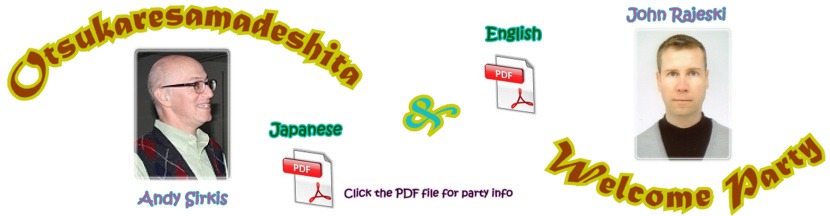
First, I want to say, “Thanks, Andy!” Most of you know that Andy Sirkis taught the adult classes after James and his lovely family went back to Canada. Andy did a great job! Our students, Yuko, and I are very grateful to him. We will show our appreciation for him at the “Otsukaresamadeshita and Welcome party”. Even though it is a temporary end to teaching the adult classes; I hope he will continue to be a valuable part of our school in the future. We will be looking forward to his help in a variety of ways.
We are also very happy to introduce to you our new teacher in this week’s blog. His name is John Rajeski. He has visited Japan many times on business and pleasure, but this is his first time to live here. He arrived the end of August; however, he is already busy teaching English and learning lots of things about his new community, Nikaho City. We hope many of you will have a chance to meet him in the near future. John has taken the time to tell us about himself. Please read what he has written for us below.
And finally, please join us for the “Otsukaresamadeshita and Welcome party” on Friday, September, twenty-eight at 7:00 p.m. Bring your friends and family. Click “here” for more information on the party. |
Instructor’s Name: John S. Rajeski
Home Country, City: The United States of America, Lots of cities
Education: Undergraduate: BA, Politics / Graduate: MBA, International Business & MA, Teaching, USC (Anticipated Graduation, May 2013)
Time in Japan: End of August 2012 – until (Open)
Hobbies: Art, music, sports, and technology
I grew up in the USA. And, like many Americans, who tend to be very mobile as a society, I moved around the nation to different places including California and Hawaii (I know that cities like San Francisco and Honolulu are both popular in Japan). I have two older sisters; they are both very talented as they have their own businesses. As an undergraduate, I participated in a study-exchange program in Egypt. As a graduate student, I also participated in a study-exchange program in Thailand.
I enjoy exploring and learning more about different cultures – of course – enjoying the food is a great way to understand more about a culture that is different from your own. I like many types of cuisine including Japanese cuisine itself. I have been fortunate to live and work in Asia during the last 6 years and am looking forward to learning more about Northern Japan.
Learning about another culture is also a great way to understand more about your own. And, as our world becomes more integrated, it is also an excellent way for making global friends and sharing ideas that can help to improve our collective experience.
Thank you for your time.
Cheers, John |
講師名: ジョン・ラジェスキー
出身地: アメリカ
学歴: 学部:政治学士 修了:経営学修士、国際経営学修士、教職、南カリフォルニア大学卒業予定
日本滞在歴: 2012年8月より滞在
趣味: 芸術、音楽、スポーツ、テクノロジー
私はアメリカで育ちました。そして多くのアメリカ人がするように、私もカリフォルニアやハワイなどさまざまな場所へ動き回りました。サンフランシスコやホノルルは日本でよく知られていますよね。私には二人の姉がいます。二人とも自身のビジネスを持つほど才能にあふれた人たちです。学部の者としてエジプトで留学をしました。大学院生としてタイで留学をしたこともあります。
私は文化の違いを学び探索することが好きです。食べ物は特に自分の国の文化との違いを知るには最高の方法ですよね。日本食も含めて、いろいろな国の料理が好きです。ここ6年間はアジアに住み、働けるという有難い環境に身をおいてきました。そして日本について更に学べることを楽しみにしています。
異文化を学ぶということは自分自身を理解することにも繋がると思います。世界がひとつになれば、世界中に友達が出来、アイディアを共有することが出来ます。それが皆の経験や知恵を向上させるきっかけになるのだと思います。
どうぞよろしくお願いします。
ジョン
|
|
|
|
This last summer we had a really successful summer camp for elementary school kids. The theme of the camp was Outer Space. We read some wonderful books. Our favorite books were “Even Aliens Need Snacks,” “Tuesday,” “Aliens Love Underpants,” and “We're Off to Look for Aliens.” I really recommend these books, especially if you want to stimulate discussion about the universe, planets or the existence of some type of alien life in the solar system.
We are no longer children and most of us have little time to think about life in the universe other than ours. However, tonight look up at the moon and think about life beyond ours. Then tell us what you think? Do you think there are other forms of life in our universe? If so, why? If you don't think so, why not?
Listen to what Yuko, John and I think about the chance of other life in the universe. Just click the “Listen to Comments” button above the blog entry on the right-side to listen to our thoughts on the subject. If you have courage, leave us a message on the recorder concerning the topic. The message can be in either English or Japanese.
Well, that is all for now, until next time...
今年の夏は小学生の子供たち向けのサマーキャンプを大成功させることが出来ました。テーマは「宇宙」でした。子供たちにいくつか本を読み聞かせたりもしましたよ。私たちが気に入ったのは「Even Aliens Need Snacks」「Tuesday」「Aliens Love Underpants」「We're Off to Look For Aliens」の4冊です。太陽系のさまざまなタイプの宇宙人の存在や惑星、宇宙について話し合ってみたい方には特にこれらの本をおすすめします。
大人になると、ほとんどの人は私たち以外に存在する生命について考えてみたりすることはしなくなります。ですが今夜は、是非月を見上げてそんな私たち以外の生命について考えてみてください。そして皆さんの意見を聞かせてください。皆さんは、宇宙には人間以外の生命体が存在すると思いますか?それはなぜですか?そうでないと思う方がいるなら、それはなぜでしょう?
それでは、祐子さんとジョン先生と私が宇宙の中に存在する生命の可能性についてどう思うかを聴いてみましょう。この記事の上部右側にある「Listen to Comments」のボタンをクリックすると私たちの意見を聴くことが出来ますよ。勇気のある方は、このトピックについてどう思うかを是非レコーダーに録音してメッセージを残してください。メッセージは英語・日本語どちらでもOKです!
それではまた次回お会いしましょう!
|
|
|
Our lives are journeys into the unknown, much like exploring the vast universe or going down to the bottom of the deepest oceans. You never know what will happen. In the midst of our journeys, we hopefully have a magical experience. An experience that is full of grace and is life-giving.
As a child, life is both easy and difficult. Much of the time is lived in a world of dreams. At times, I was a pro basketball player, and at other times a fisherman at sea. Many dreams died and other dreams appeared. A song, I listened to often was, “Puff the Magic Dragon.” I used to emotionally enter the song and spend time with the dragon, making our own world. It was my magical moment. It was a special time to dream. What songs as a child allowed you to dream and experience a magical moment? Let our readers know what your song was.
You can click the play button above to listen to my magical song, “Puff the Magic Dragon.” Have you heard this song before? Below are the lyrics of the song in Japanese. I do not know if it is a perfect translation, but I am sure it will communicate the basic meaning to you.
| Well, that is all for now. We hope to hear from you this week. |
パフ 魔法の竜が暮らしてた
海に秋の霧 たなびくホナリー
リトルジャッキーペーパー友達で
いつでも仲良く ふざけていた
ボートをこいで 旅を続けた
大きなしっぽに ジャッキーを乗せて
王様たちは 挨拶をした
海賊たちは 旗を下げた
歳をとらない竜とは違い
ジャッキーはいつしか大人になり
とうとうある日 遊びに来ない
さびしいパフは 涙を流す
みどりの鱗 流して泣いた
桜の道を散歩もせずに
ともだちはなく ひとりぽっち
頭を垂れて ほこらへ帰る
パフ 魔法の竜が暮らしてた
海に秋の霧 たなびくホナリー
---------
教科書版の、動画は見つからなかったのですが、歌詞は発見しました
---------
パフ 魔法のりゅうが 暮らしてた
低く秋のきり たなびく入り江
少年ジャッキーは友達で
毎日なかよく遊んでいた
パフはボートをこぎながら
ジャッキーしっぽにのせて 海原を行く
海ぞく船は おどろいて
すぐに旗をおろし あいさつした
やがてジャッキーは 旅に出て
パフはただひとり さびしく暮らす
そして今も入り江には
パフの声がして 海がさわぐ
|
|
|
Friday night we had our Ostukaresamadeshita and welcome party for Andy Sirkis and John Rajeski. We were delighted to see so many people, thanks for coming everyone. We had lots of delicious food, great beer, and drinks for everyone.
Both Andy and John gave speeches and we had an enjoyable true-false quiz. Neil, Tamaki and Mr. Igarashi were winners. It was interesting to find out some of the things each man has done. For example, Andy has met the former American president, Gerald Ford; and John has met the president of Dell Computer.
We had a special traditional dance performance by Kei Ito. Her dancing was so beautiful and graceful. I sometimes forget that I live in Japan because I am used to my daily routine; however, the dance was so amazing that I thought, “Wow, this is truly Japan.”
The night’s activities ended but the talking and laughter continued. Thank you everyone for making the night so enjoyable.
|
|
|
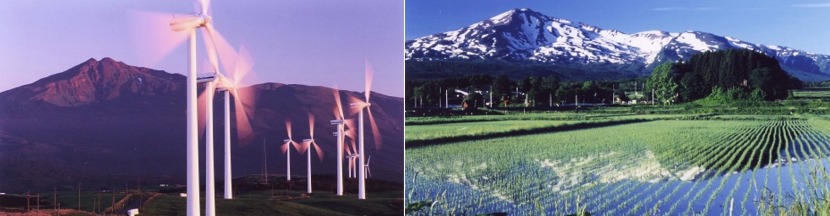
Hello, this is John. There are a number of things that I like about this part of Northern Japan. For example, the sky is usually a very pretty color of blue. It looks really nice with how green the hills and the mountain are set against it. The rice fields are also a pretty color. I’ve watched them turn to a light, yellow color since I first arrived. As for the weather, except for a few rainy days last week, it has been amazing (including the record temperature that was set last week on Monday!)
As for the Nikaho area, the people are friendly. The food is really good (especially all of the fresh seafood). I like that there are a lot of windmills on the hills around the community itself. They are really good for the environment by making clean energy. I also see a lot of hawks and other types of birds when I am out and about. Finally, I like to be able to walk or ride a bicycle to the ocean as some of the sunsets that I have seen are really pretty. Thank you.
|
|
|
We will have our Halloween party for elementary school kids this year again. The date will be Saturday, October 27. The time is 4-7pm. Kids can come to the school wearing their costumes or get in their costumes here. It is okay to wear plain clothes, too. We will have lots of fun activities and games. Of course we will do our usual “trick or treating!” Please sign up your child no later than October 20. The cost is 500 yen. You can check out the PDF Halloween flier above this blog entry.
To make this party more successful, we need more volunteers. Please let me know if you're interested in helping us. Please come and enjoy the fun!
|
|
|
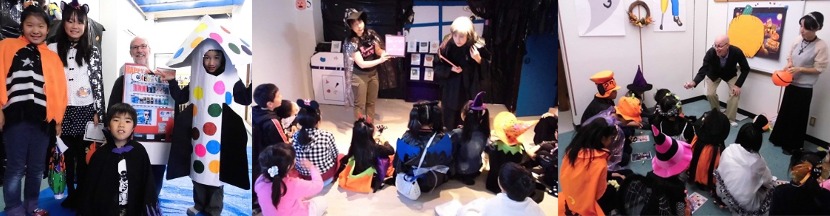
We had our yearly Halloween party for kids on the 27 of October. We had a great turn out of kids and volunteers. More than eighty enthusiastic children came to play our traditional Halloween games. Yumiko and Mrs. Yabe did a fantastic job in the witches’ kitchen. They gave the kids a wonderful story-time experience. The children kept on guessing which door had the Halloween treat. Jinko and Keiko kept the kids busy shooting down the scary creatures. Kei and Andy gave the kids soda candy to play Halloween bingo. All the kids enjoyed eating their candy after the game. Everyone was a winner. Masahiro and Neil had wild and crazy tiddlywink races with the kids. Naomi had no partner, but she led the children in the ring-a-drink game. It was a nice evening, so we played the game outside. At our last station, Stephanie and Akemi helped the kids look for creatures in a picture.
After the game stations were finished, the kids went around the neighborhood “trick-or-treating. The kids came back and ate their hot dog, caramel apple and other goodies. Everyone had a drink of their choosing to quench their thirst and all seemed to go home very satisfied. Akane, Hitomi and Yoko made the hot dogs, and Akemi and Yuko made our caramel apples. My wife said, “The caramel apples were very popular with the kids this year. The ladies coated the apples in the morning which was one less thing to do during the party. That was a good decision.
I don’t know if it is my imagination, but it seems the kids are wearing more original Halloween costumes each year. My son was a rocket this year and I was a vending machine. We spent several hours working on our costumes. We will announce the four costume winners next week.
|
|
|
The Halloween contest winners have been decided. You can see the four lucky winners above. Aren’t their costumes creative? Each winner receives a 500 yen gift certificate. We had more kids wearing costumes than not wearing costumes this year. That is a first for us.
People asked me, “How was Halloween?” I usually said, “It was pretty good this year.” Why did I say this? Well, the following Monday afternoon, I had 11 kids tell me that they are looking forward to next year’s Halloween. I enjoyed hearing that!
I will not be making a Halloween web page this year, so if you want to see the Halloween photos or make a CD of them, please come to the school. Please call us and let us know you are coming, thanks.
|
|
|
2012 is quickly coming to an end. I cant’ believe it is already the middle of November. Our students will be making Christmas cards for our student-exchange with our sister-city, Anacortes, Washington. Every year we exchange cards for the holiday with Island View Elementary School. Our fourth graders send New Year postcards, the fifth and sixth graders send Christmas cards. This year the older kids will even write their friends a letter in English.
The third graders are not involved in the exchange, but they will have fun making rockets this week along with learning about our planets in English. We will enjoy learning about what aliens like to eat through a delightful storybook. After reading the book, we let the kids who win the space-junken game, to eat green alien food. The kids are always surprise to realize that it tastes pretty good. What is it? We take a slice of bread, spread peanut butter on it, and then top it off with banana slices. Have you ever tried strange food from another culture?
|
|
|
It is Thanksgiving weekend in the United States. The holiday is the fourth Thursday in November each year. It is a special time for families to spend some quality time with each other. Most families will prepare a traditional meal which usually includes a baked turkey. Click “here” to listen to President Obama’s message to the American people. You can listen to the message with either English of Japanese captions.
|
|
|
Congratulations, Riku! Why? Please continue to read.
Today, I want to tell you of a young boy who has been working hard studying English at the school for the last nine years. His name is Riku Yamada. He started learning English here when he was a first grader in elementary school.
He has always enjoyed English. Riku is the only student that would take stories from our library and read and listen to two or three stories a week at home. Then he would come to school and have a short reading, spelling and question and answering session with me. We focused on communicating verses memorizing. Well, all of Riku’s hard work has paid off this year. He entered the junior high school speech contest and won first place in the local, prefectural and Tohoku competitions.
On Thursday he headed to Tokyo for the National Speech Contest. I received a call from him yesterday. He gave his speech and was one of 27 kids to qualify for the final round. Congratulations, Riku!
He will be competing again today with the other finalists. I will let you know the final results next week. In the meantime, please click the play buttons in the graphic above to see Riku both as a little boy, and now as a young man. I hope you enjoy the video clips.
Bye for now.
陸(りく)君 おめでとう! どうしてかって? どうぞ読んでみてください。
今日は、皆さんに当英語学校で過去9年間に渡り一生懸命英語を勉強してきた幼い少年についてお話させていただきます。少年の名前は山田 陸(りく)君です。彼は小学1年生の時、当校で英語を学び始めました。彼はいつも英語を楽しんでいました。
陸君は私共の書庫より週に2~3冊の物語を家に借りていき、それを読んで さらに 耳で聞いて勉強してきた、たった一人の生徒です。当校に来ては、ちょっとした読書や単語のつづりを練習したり また 私と質疑応答の方法で勉強したものです。私達は暗記よりコミュニケーションに集中させました。さて、陸君が一生懸命勉強してきた成果が今年出ました。
彼は中学校英語弁論大会に出場し、全県と東北大会で優勝しました。木曜日に陸君は全日本中学校英語弁論大会出場のため上京しました。昨日彼から電話がありました。彼は.最終決戦に望むふさわしい27名の一人でした。おめでとう,陸君!
彼は今日また他の決勝戦出場者達と競いあうでしょう。最終結果は来週お知らせします。ところで、RIKU YAMADAと書いてある図にa little boy とa young manの両方ありますがPlayボタンをクリックすると陸君が英語を勉強している状況をビデオクリップで見ることが出来ます。皆さんビデオクリップを見てね。
それではまた。。。
|
|
|
Let me continue my story from last week. I was telling you about Riku Yamada. Did you watch the two video clips? One clip was when he was a little boy and the other was of him practicing his speech for the national speech contest. He is pretty amazing, isn’t he? If you haven’t watched them, click the “JHS National Speech Contest” tab and then click the play buttons in the graphic.
Well, Riku came to school on Tuesday night. We didn’t have the usual lesson. Instead we celebrated his success. We talked about his weekend in Tokyo, ate sushi and had a delicious piece of chocolate cake. We were both extremely happy. Why? Did Riku win first place in the national speech contest for junior high school students? No, he didn’t. However, he did take fifth place. Well done, Riku!
先週に引き続づきお話いたします。山田 陸君についてお話していましたね。2つのビデオクリップ ご覧になりましたか?左側のビデオクリップ(Play)は幼少の時の勉強風景 右側のビデオクリップ(Play)は全日本中学校英語弁論大会に向けてスピーチを一生懸命練習している様子です。素晴らしいと思いませんか?
もし、どちらのビデオクリップもご覧になっていない方は、 “JHS National Speech Contest”のタブをクリックし、図のplayをクリックしてください。さて、陸君は火曜日の夜、授業にやって来ました。私達は通常通りの授業は行いませんでした。それより陸君の成功をほめたたえました。彼の東京での週末について話しました。“寿司を食べたこととか、おいしいチョコレイト ケーキを食べた”ことなど。私達は、本当に嬉しかったです。どうしてかって? 全日本中学校英語弁論大会で一位になったから?いいえ、違います。でもね、彼は第五位を獲得したんですよ。
陸君、よく やった~!
|
|
|
We are having our annual Christmas party for children this year on December 24. However instead of one party, we will have two, one in the morning and one in the afternoon. We have lots of fun things planned for the children. You can read about the event by clicking on the PDF file button in the graphic. We will be reading one of my favorite Christmas stories during the party. You can listen to it on the YouTube link above or click "here" to go straight to the video.
The story is entitled, “Barrington Bunny.” It is about a little bunny that lives in the forest all by itself. It is a sad story, but it tells the true meaning of Christmas. If you have the time to listen to it, I think it will warm your heart. Well, I hope that your holiday season will be a special one. Until next time…
|
|
|
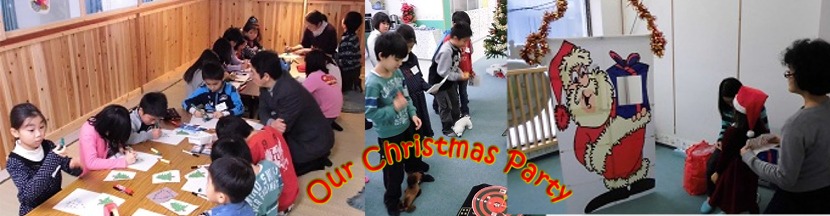
It was our first year to host two different Christmas parties for elementary school children on the same day. We had one in the morning and the other in the afternoon. We had a school full of enthusiastic children. We started the parties off with making Christmas tree charms. To my surprise, it was a big hit with all of the kids. After being creative with their Christmas craft, we proceeded to play lots of Christmas games. We ended the party with a present. Everyone was excited to take home a Christmas bag of goodies.
I want to thank Mr. Karino, Yuko, Akemi and Mikiko for their hard work to ensure that the children had a great time. I really think this year’s parties were a huge success. I am looking forward to next year.
|
|